![[personal profile]](https://www.dreamwidth.org/img/silk/identity/user.png)
A second week of words English got from the Taíno language of the Caribbean, though in this case it's not a sure thing:
canoe (kuh-NOO) - n., a light narrow boat with both ends sharp, usually propelled by paddling.
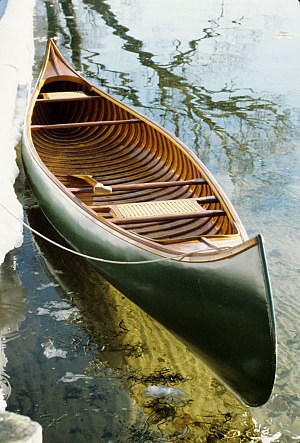
Thanks, WikiMedia!
In North American English, a canoe is always open as shown, but TIL in UK English, the word can also be applied to a kayak, which as we saw is always covered. We got the word from Spanish canoa, which got it from an Arawakan language that is probably Taíno, but the form there was never recorded -- based on comparisons with other, still living Arawakan languages such as Lokono, Wayuu, and Island Carib, it's been reconstructed as *kanowa, and it specifically meant a dugout canoe made by digging out and shaping a log.
---L.
canoe (kuh-NOO) - n., a light narrow boat with both ends sharp, usually propelled by paddling.
Thanks, WikiMedia!
In North American English, a canoe is always open as shown, but TIL in UK English, the word can also be applied to a kayak, which as we saw is always covered. We got the word from Spanish canoa, which got it from an Arawakan language that is probably Taíno, but the form there was never recorded -- based on comparisons with other, still living Arawakan languages such as Lokono, Wayuu, and Island Carib, it's been reconstructed as *kanowa, and it specifically meant a dugout canoe made by digging out and shaping a log.
---L.


