![[personal profile]](https://www.dreamwidth.org/img/silk/identity/user.png) prettygoodword
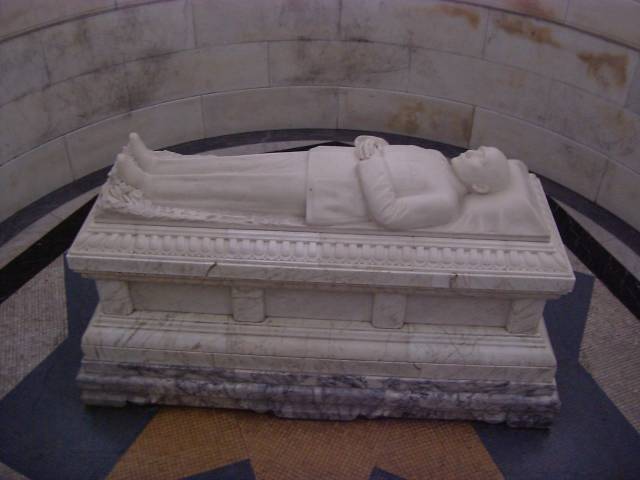
prettygoodwordgisant (zhee-ZAHN) - n., a recumbent tomb effigy.
That is, a sculptured representation of a dead person lying down, usually life-sized, usually as part of a sepulchral monument. The form developed in Western Europe in the Middle Ages and continued to be used through the Renaissance and early modern period. We got it from French, as you can tell from the pronunciation, from the present participle of gésir, to lie (flat), from Latin jacēre, to lie (flat). As a modern example, here's the gisant of Sun Yatsen:
Thanks, WikiMedia!
---L.
That is, a sculptured representation of a dead person lying down, usually life-sized, usually as part of a sepulchral monument. The form developed in Western Europe in the Middle Ages and continued to be used through the Renaissance and early modern period. We got it from French, as you can tell from the pronunciation, from the present participle of gésir, to lie (flat), from Latin jacēre, to lie (flat). As a modern example, here's the gisant of Sun Yatsen:
Thanks, WikiMedia!
---L.


no subject
Date: 2022-08-19 07:48 pm (UTC)no subject
Date: 2022-08-19 10:37 pm (UTC)no subject
Date: 2022-08-20 05:13 pm (UTC)